




Transit 1
![]() |
TRANSIT_1 EDWINA ASHTON, MAX DEWDNEY, NICOLE ELLIS, ASHLEY HEDGECOCK,
Opening: TWednesday, 13th December 2006, 6.30-9.30 PM
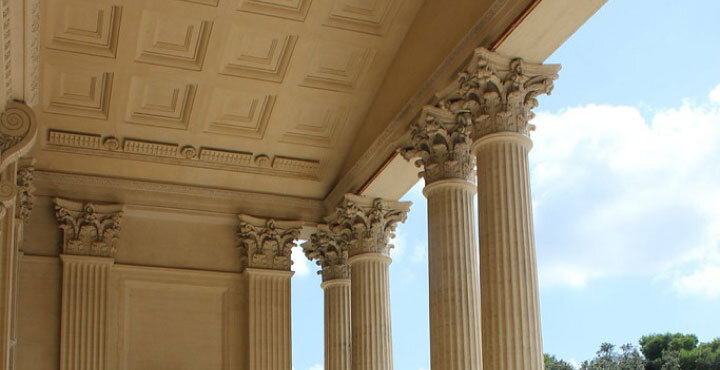
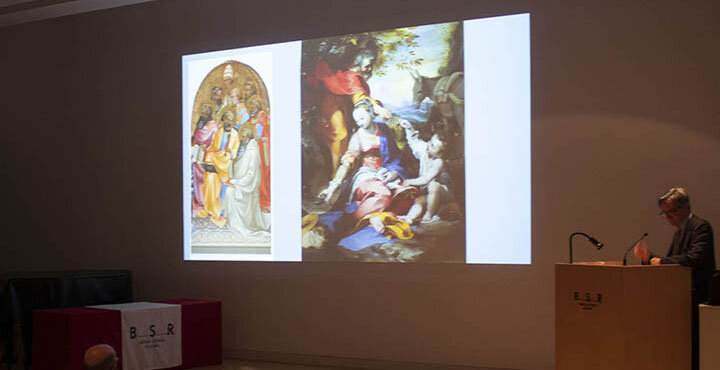
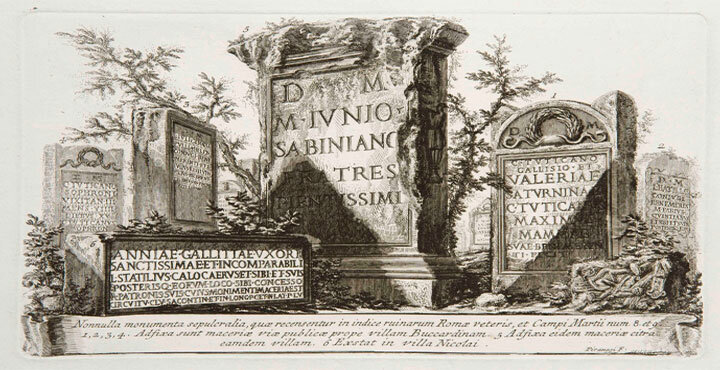
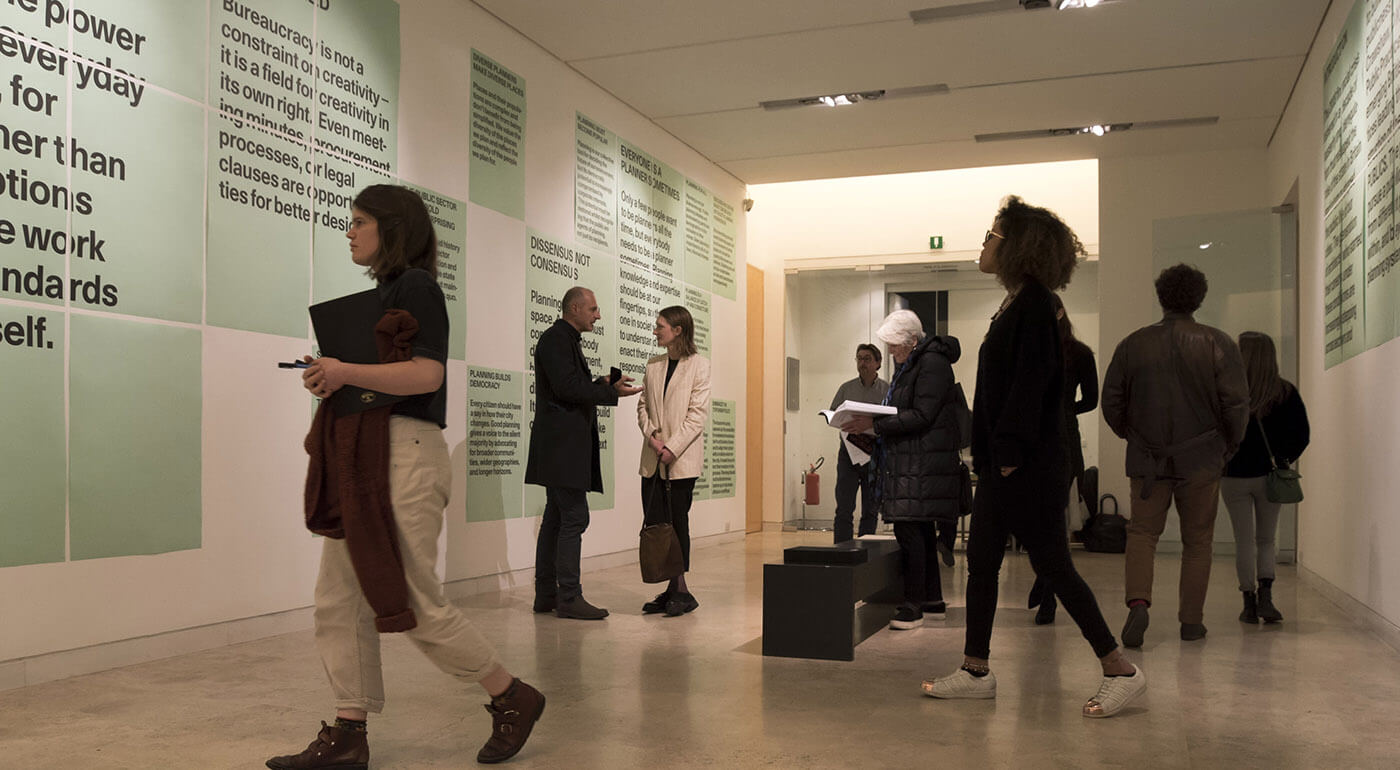
The British School at Rome Transit_1 is the first of the three exhibitions in the British School at Rome Fine Arts programme 2006-2007. The title refers to the transitory nature of the artists’ and architect’s stay in Rome and to the temporary nature of their residence at the British School. The exhibition, coordinated by Jacopo Benci, is comprised of the works of seven artists (Edwina Ashton, Nicole Ellis, Ashley Hedgecock, Laurence Kavanagh, Louisa Minkin, John Walter, Stephen Wilson) and one architect (Max Dewdney). |
![]() |
Edwina Ashton «Edwina Ashton’s drawings and paintings are inspired by a huge variety of subjects: out-dated walking guides, books on pet care, Renaissance paintings, images drawn from memory or coaxed from the particular shape of a tea stain on a left over scrap of card. Ashton’s choice of subject matter displays a fascination with a place, which appears decidedly out of step with the present – removed from the vexations of the contemporary urban world but offering just as little solace. In her videos mice sticks and insects grapple with the pitfalls in conversation and other everyday incidents.» [Dale McFarland] Edwina Ashton (Wingate Rome Scholar, September 2006-January 2007) makes films, drawings and performances in which animals and people grapple with social encounters, friendship and language. In her work, costumes, intentions and beliefs tend to fall apart. She read philosophy at Cambridge University and Fine Art at Goldsmiths' College, London and has exhibited video films and drawn installations at the Museum of Modern Art, North Miami; D'Amelio Terras, New York; The Carnegie Mellon University Gallery, Pittsburgh; Galleria d’Arte Moderna, San Marino; Arnolfini, Bristol and Camden Arts Centre, London. She teaches at Chelsea College and Camberwell School of Art, London. |
Max Dewdney «The work presented is part of an exploration into the experience of public and private space. The project is set in the context of Rome and works with the idea of shadow as a duality of presence and absence. No-Stop Monument draws on the model No-Stop City, a critique of the modernist city plan by Archizoom Associati, 1970. No-Stop Monument is presented at half the scale of the original model, the mirror used is shaded instead of the original clear mirror used in No-Stop City, and therefore does not reflect infinitely. The scaled city is replaced with an interior, showing a fragment of a room, a courtyard and a monument. This work moves from the clear to the obscure and from the public to the private and explores the psychological dimensions of space.» [Max Dewdney] Max Dewdney (Rome Scholar in Architecture, October 2006-June 2007) is from London. His work is concerned in exploring the boundaries of what is considered Architecture. The work deals with the place of narrative in the construction of space and contemporary shifts in the context of perception. .His most recent exhibitions include: Incomplete House Project, a solo show in Dilston Grove, CGP, London, Centrifuge, Tannery Arts, Drawing Rooms, London & 2015, Modern Art Oxford, Oxford and has exhibited in New York & Berlin. He is a founding member of Mobile Studio (www.themobilestudio.co.uk) whose most recent exhibition, Brief City 2051 was at Hoxton Gallery, London (2006), and have previously exhibited at Jerwood Space, London and most recently published in Icon Magazine. |
Nicole Ellis «My art practice investigates issues of culture and history in a postcolonial context. The focus has been on material, cultural and historical traces that register a human presence, including the body in architecture. This focus facilitates a move across different disciplines, inside the fine art arena and out. Archaeology, architecture, historical record and environmental modelling, have intersected with painting, installation, sculpture and animation to produce work that relies on a physical encounter with an object or site. Archaeology is important and the 'Site Works', from the early nineties use similar methods by working directly on the floorboards of an early 20thc building, once occupied by rag trade workers and artists. The lifted paint ‘skins’ show the grain of wood, amidst signs of accumulated waste and wear from the previous inhabitants of the building. Recent work considers the ‘spatialising’ of history: the contrast between the surface and clarity of Renaissance architecture and the so called depth and obscurity of baroque space, in relation to the archaeologist/artist who accesses different layers of history/matter: a past empire, people and monuments, residued with class, gender and race, etc.» [Nicole Ellis] Nicole Ellis (Australia Council Resident Artist, October-December 2006). MFA, University of Tasmania, Hobart, 1982. Senior Lecturer in Painting at the College of Fine Arts, University of New South Wales, Sydney. Selected recent exhibitions and awards: 2005, London Looking East: Australian Artists in Australia Council Studios, 1985–2002, University of Tasmania; China-Kunming,1st International Sculpture Symposium, Kunming, China; Small Offerings, Srilanken & Australian exhibition, Cross Arts Projects, Sydney; 2004, Interventions, Greenaway Art Gallery, Adelaide, South Australia; (solo) Residue, Tin Sheds Gallery, Faculty of Architecture, University of Sydney (solo); 2002, 3rd International Sculpture Symposium, Hue, Vietnam; 2000, Tachikawa International Art Festival, Tokyo; Harbour, Sydney 2000 Olympic Arts Festival, Museum of Sydney |
![]() |
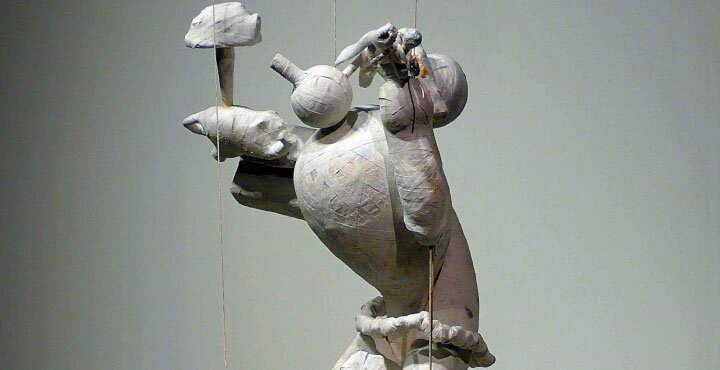
Aisling Hedgecock «More recent works include sculptural objects centring upon the phenomena of the everyday, the alchemy of packaging materials; polystyrene beads cardboard, glue. The large-scale work Saracen (2006) references a medieval colloquialism of the ‘sarsen’ stone. Pre-history monoliths looming on the plains of South West England were considered suspicious interlopers by the human inhabitants of the landscape. These sculptures exist in a bizarre state of paradox. The nature of the everyday material is occupied in the absurdist abundance between the rationale of permanence and temporality, of neither flesh nor stone. The physical nature of the sculptures instinctively arouses a sense of fragmentation, not dissimilar to a diver entering a pool of water, another world. This process is further illuminated in imaginary drawings of coral-like vestiges. In this respect the practice of drawing alludes to uncharted and untold spaces.» [Aisling Hedgecock] Aisling Hedgecock (Sainsbury Scholar in Drawing & Sculpture, October 2006-September 2007) graduated from the Royal College of Art earlier this year. Since leaving Wimbledon School of Art in 2001 she has exhibited in the UK, and Europe. She was short listed for the Pizza Express Drawing prize in 2003, and received a Mann Drawing Prize in 2006. Recent exhibitions include, Saudade, Highbury Studios, London; Transiti, Æmilia Hotel Spazio Cultura, Bologna; Transit_1, The British School at Rome (2006); Gabriel Rolt Gallery, Amsterdam (2007), air guitar & two teaspoons, Bischoff Weiss, London. Hedgecock was recently nominated by The Independent as outstanding young artist for their ‘Talent 2007’ issue. |
Laurence Kavanagh «In my recent works I am using a Roberto Rossellini film called The Machine to Kill Bad People (1948-52) to provide a structure for a series of works. In this film classic Rossellini issues are dealt with; Landscape which can be subdivided into Nature, Myth and History; Portraiture, Fantasy and Morality. What is distinct about this film is that it deals with these issues within the objective context of the creative act.» [Laurence Kavanagh] Laurence Kavanagh (Derek Hill Foundation Scholar, October-December 2006) lives and works in London. He studied at Newcastle Upon Tyne University. Recent shows and curatorial projects include The music of the future, Gasworks Gallery, London; Wider than the sky (curated by Lizzie Carey Thomas), Spitalfields, London; Premio del Golfo, La Spezia, Italy; Corpa Nova, London. Recent awards include the British School at Rome Derek Hill Foundation Scholarship, and Arts Council grants. |
Louisa Minkin «Rome is a site where you could figure the subconscious of a city to be evident in its topology – a place where complex histories are on the surface, unburied. In Walter Benjamin’s terms – a phantasmagoria of history. It is a city dense with narratives; even the dust here has a story to tell. Statues are said to speak; images and iconography transform and move through different cultures and ideologies. The past folds into the present like a shadow or a haunting. The Roman surface is non-orientable. It is not surprising that it is easy to get lost. I have been following a guidebook published in 1889, walking the city in the wrong time.» [Louisa Minkin] Louisa Minkin (Abbey Fellow in Painting, October-December 2006) lives and works in London. She studied at the Ruskin School of Art, University of Oxford, and the Royal College of Art, London. She is currently Subject Leader in Painting at Camberwell College of Art, University of the Arts, London. Recent exhibitions and screenings include: Frenzy, The Metropole Galleries, Folkestone; Nightwatchman: Roll it Back!, Beaconsfield, London; Infinite Fill, Foxy Productions, New York; Or Not, Five Years, London; Closer Still, Artsway; Reading Matter, The Norwich Gallery and Standpoint, London; Close to Home, UFF Galeria, Budapest, Hungary. Awards include Abbey Fellowship in Painting, The British School at Rome, and the Art Foundation Fellowship in Painting. |
![]() |
John Walter «The recent paintings represent an emptying out of my process. This is a sparsity born of maximalism, from a sifting through of my personal vocabulary. I have been working with new images both invented and appropriated in response to being in Rome. I have worked to position these new discoveries against my old stock of images in order to make sense of the experience of being in Rome.» [John Walter] John Walter (Sainsbury Scholar in Painting and Sculpture, October 2006-September 2007) studied at The Ruskin School of Drawing and Fine Art, Oxford University and the Slade School of Fine Art, University College London. He was artist in residence at the Klondike Institute of Arts and Culture, Yukon, Canada. Recent exhibitions include: Jerwood Drawing Prize 2005, London and touring; Garden of Sexual Diseases (solo show), Toni Heath Gallery, London; The Risky Business of Import/Export, The Tank, New York; Queer Eye, group show, University of Massachusetts, Boston. |
Stephen Wilson «Over the past five years I have produced artwork and writings that show a preoccupation with significant works of literature and subsequently an ongoing relationship to visual culture. A central concern lies in the historical anxiety and non-sequential reading that is often conveyed through painting. In numerous works I have drawn distinctions between the literary structure and where a visual parallel occupies the compositional framework between text and image processes. In Chapter 3 of Carlo Collodi’s The Adventures of Pinocchio (1883), the author describes the home of Pinocchio and Geppetto (his fictional maker). Collodi conveys a single room which depicts a fireplace that is not in fact real but painted on the wall for effect. The reader is not only introduced to the image of a painted fireplace but also to the wonder of writing which perpetuates the reader’s imagination. Collodi’s Fireplace attempts to address where painting and writing collide as well as how fact and fiction converge. Collodi’s Fireplace (2005) is a five minute loop. This work is accompanied by a framed digital image entitled: Unpainting Collodi’s Fireplace (2006).» [Stephen Wilson] Stephen Wilson (Abbey Scholar in Painting, October 2006-June 2007) lives and works in London. Higher education: 2002-07, PhD by Project (Carlo Collodi’s "The Adventures of Pinocchio" represented in visual culture and the art of Macchiaioli in mid-19th-century Risorgimento Italy), Royal College of Art, London. 1999-2001, MA Fine Art, Royal College of Art, London. 1995-1999, BA Fine Art, Gerrit Rietveld Akademie, Amsterdam. Selected recent exhibitions include: 2006, Monstrous Tales, APT Gallery, London (Three Sons, performative collaboration with Oreet Ashery); Fortnight of Solo Shows, Ben Uri Gallery, London (Three Sons, performative collaboration with Oreet Ashery). |