














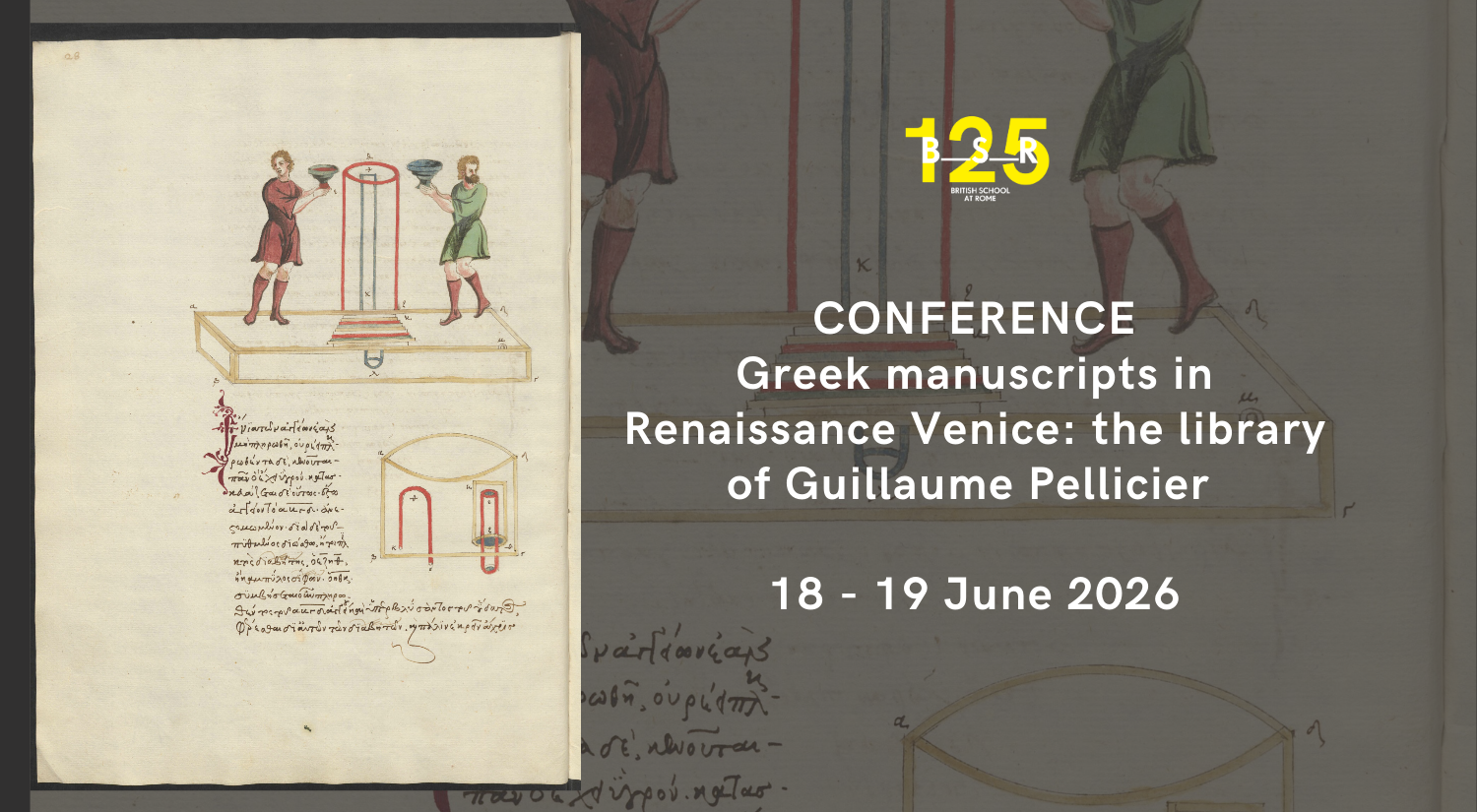
The library of Guillaume Pellicier (c.1490-1567), French bishop and ambassador to Venice, is a key resource for our understanding of the transmission of Greek culture
18 June from 14:30
19 June from 9:30
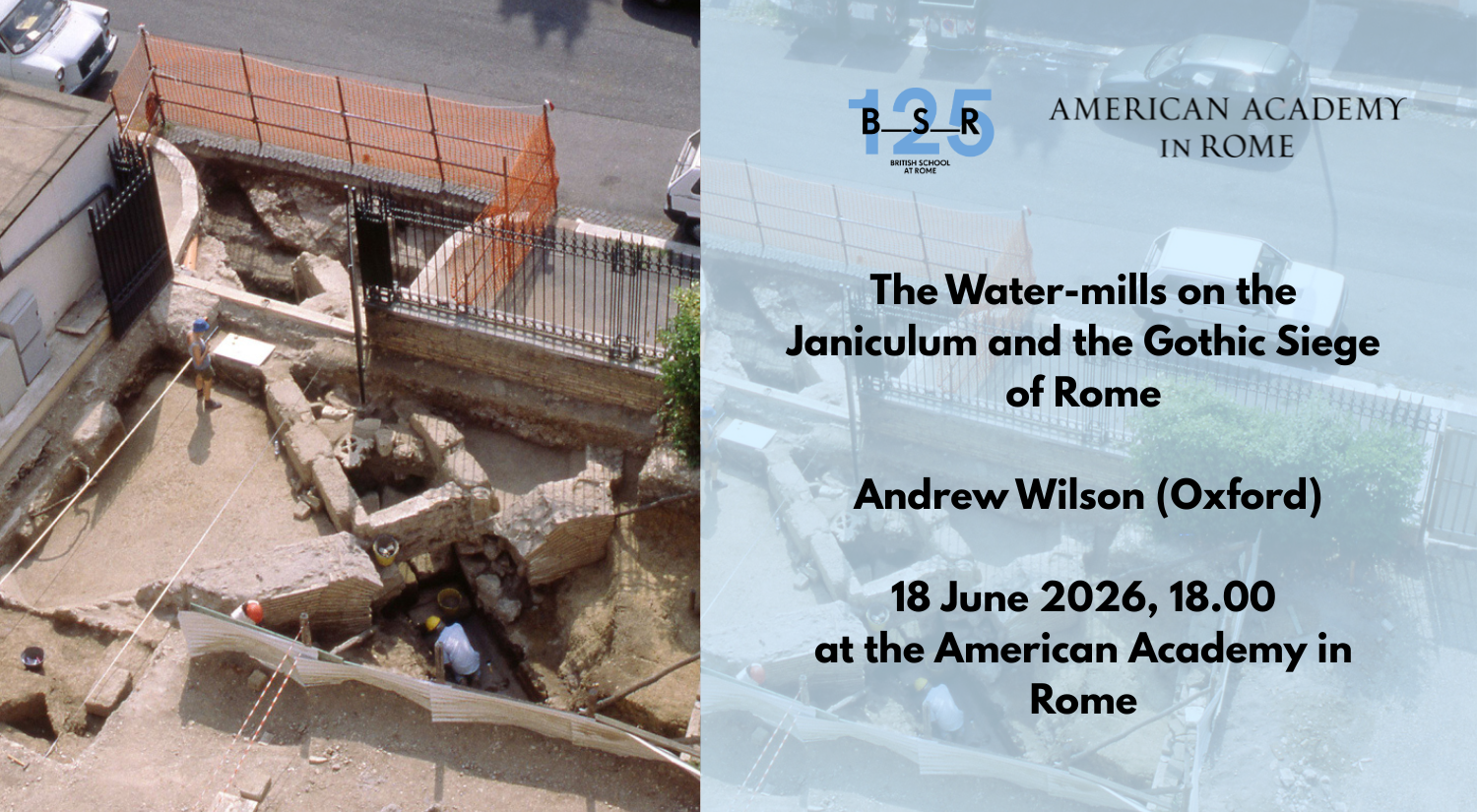
This is the third in a series of lectures on Material Environments, hosted jointly by the American Academy in Rome and the British School at Rome over the academic
18 June 2026
18:00 - 19:30
The library of Guillaume Pellicier (c.1490-1567), French bishop and ambassador to Venice, is a key resource for our understanding of the transmission of Greek culture
18 June from 14:30
19 June from 9:30
This is the third in a series of lectures on Material Environments, hosted jointly by the American Academy in Rome and the British School at Rome over the academic
18 June 2026
18:00 - 19:30

The British School at Rome (BSR) invites expressions of interest from postdoctoral scholars who wish to apply for the British Academy Postdoctoral Fellowships with the BSR as

Applications are now open for the new Rick Mather Rome Fellowship in Architecture, offered in collaboration with the Rick Mather David Scrase Foundation. Honouring the

At the British School at Rome, exhibitions have long been at the heart of our programme across Fine Arts, Architecture, Archaeology and the Humanities. Each